What is harm outside the home (sometimes said as contextual safeguarding)?
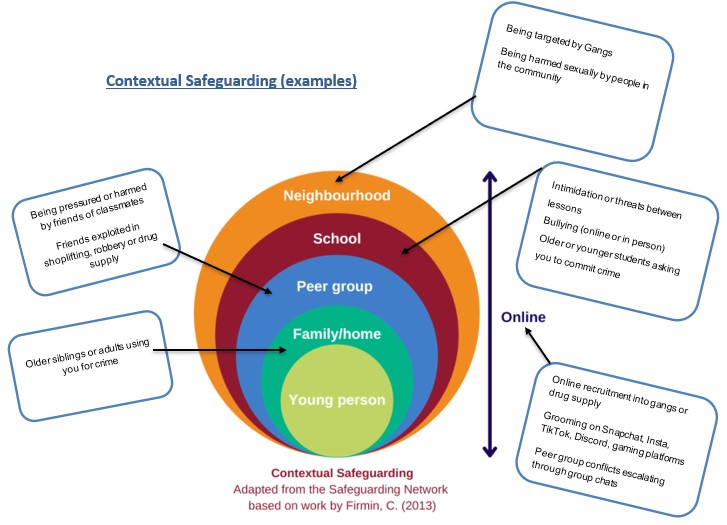
Harm outside the home is about keeping you safe not just at home, but everywhere you go, such as school, out with friends, online, on public transport, or in your local area.
Examples of what harm outside the home might look like are shown in the diagram below:
Types of exploitation and harm outside the home can include:
Child sexual exploitation is when someone tries to trick, pressure, or force you into doing sexual things.
This might happen if someone:
The person might be:
You can find out more about this here.
When another young person pressures, bullies, or hurts you, including friends, partners, or people you know.
You can find out more about this here.
Financial exploitation is when someone uses your bank account to move money for them.
This might happen if someone you know or has met online:
The money often comes from illegal activity, even if that isn’t explained to you.
You can find out more about it here.
Child criminal exploitation is when someone uses, pressures, tricks, or forces you to commit crimes for their benefit.
This might include:
You can find out more about this including drug debt and county lines here.
When people take away your freedom and control you so they can use you for work, crime, or other harm this includes making you sell drugs for someone. You may hear the word ‘trafficking’ You can find out more about this here.
If you have been trafficked or are worried that you have been, a trusted adult such as your social worker can help keep you safe and may refer you to the National Referral Mechanism (NRM). You can find out more here.
When you run away or disappear because you feel unsafe, scared, or unhappy or someone who is exploited you forces you to go missing for the purpose of County Lines or sexual exploitation.
You can find out more about it here.
When someone encourages you to believe extreme ideas that promote hate, violence, or harm to others. Radicalisation is when someone starts to believe or support extreme or ‘radical’ views. They might begin to change their behaviour and beliefs alone or they might be being pressured or persuaded by someone else.
You can find our more about it here.
When groups pull you into behaviour involving violence, drugs, weapons, or crime, and make it hard to leave. Some gangs will want you to do things that are dangerous or illegal, or they might try to pressure you to do things you don’t want to. It can be hard to say no if that’s happening.
You can find out more about it here.
When people use social media, gaming, or messaging apps to pressure, threaten, or groom you.
You can find out more about grooming and online exploitation here.
You can also visit here to report nude and sexual images of yourself . Report Remove is here to help young people under 18 to confidentially report sexual images and videos of themselves and remove them from the internet.
Weapon carrying is when someone carries a knife, gun, or other weapon, often to try to feel safe, powerful, or respected.
Sometimes young people are:
Important things to know
You can find out more here.
You can also find a list of knife surrender bins here.
Safe Places
Here is where you’ll find links to people and services that can help if you feel unsafe, need support, or want advice about relationships, friendships or anything else in Wolverhampton.
The Way Youth Zone
Catch 22
Base 25
Wolverhampton 360
Embrace
Family Hubs
If you are worried about yourself or another young person, you are not in trouble and you don’t have to deal with it alone.
You can:
Speak to a trusted adult, like a parent, carer, teacher, or youth worker
Contact the Wolverhampton Multi-Agency Safeguarding Hub (MASH) on 01902 555392. You can reach them Monday to Thursday from 8:30 AM to 5:00 PM, and Friday from 8:30 AM to 4:30PM
For emergencies outside these hours, call 01902 552999.
Or speak to another adult you trust
Important to remember
It is never your fault
You won’t get in trouble for asking for help
Getting support is a strong and brave thing to do.